
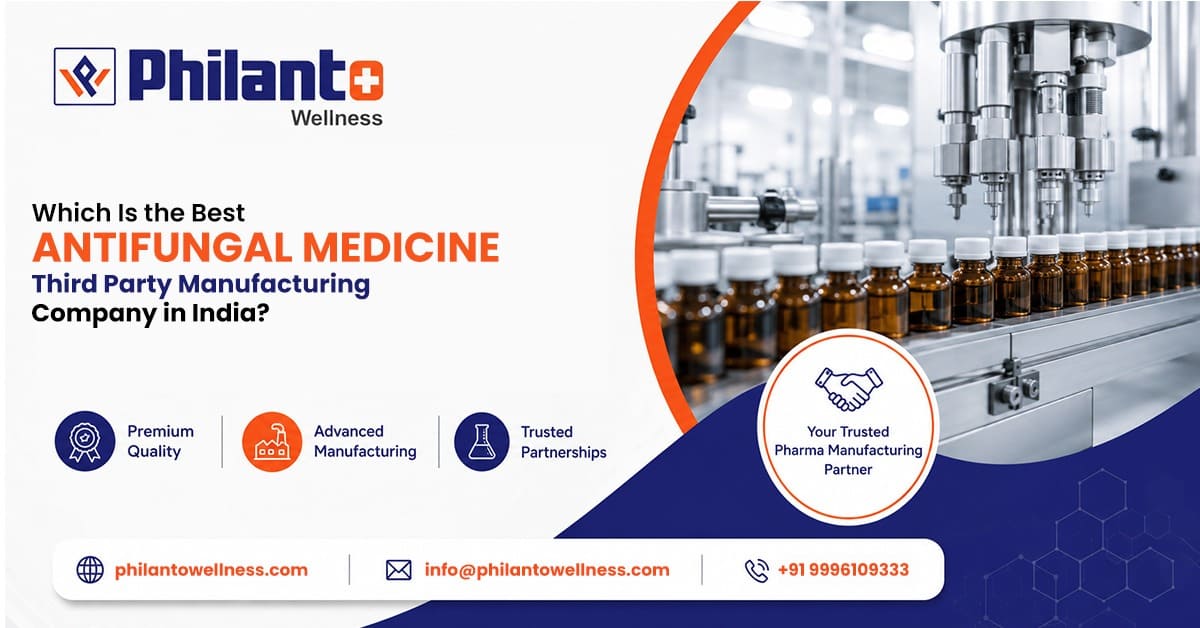
The need for antifungal drugs continues to provide opportunities for pharmaceutical companies, distributors, marketers and entrepreneurs to broaden their product portfolios. But picking an Antifungal medicine third party manufacturing in India is more than just comparing quotations. Companies need to assess manufacturing capabilities, product quality, regulatory documentation, minimum order quantities, packaging alternatives, delivery times and after sales assistance. If you want to develop or expand an antifungal pharmaceutical range later, engaging with the correct third party manufacturer can help to reduce infrastructure requirements and allow you to focus on branding, marketing and distribution. This tutorial will cover what to look for when choosing a manufacturing partner and why Philanto Wellness is a good option for firms looking for organized third-party pharma manufacturing help.
What is antifungal medicine third-party manufacturing?
Antifungal third party manufacturing is a contract manufacturing arrangement under which a pharmaceutical company makes antifungal medications for another company based on mutually agreed specifications and branding needs.
Furthermore, the client might outsource the manufacturing process to a certified manufacturer instead of setting up its own manufacturing plant. The manufacturer may provide, depending on the agreement:
- Product Manufacture
- Purchase of Raw Materials
- Quality Test
- Packaging and Labelling
- Batch Documentation
- Specific Product Manufacturing Needs
- Order Processing and Shipping
Consequently, companies can benefit from this arrangement if they want to establish an antifungal product portfolio but don’t want the whole expense and operational burden of running a production facility.
The importance of choosing the right manufacturer of antifungals
Antifungal medicines are used to treat fungal infections, and hence product quality and consistency are crucial issues. The genuine Antifungal medicine third party manufacturing firm should have especially suitable systems in place for production, quality control, documentation, packaging, and batch traceability.
Businesses should check before setting up a company:
- Manufacturing credentials and relevant licences
- Manufacturing capabilities relevant to the product
- Quality assurance procedures
- Documentation and testing
- Packaging requirements
- Minimum quantity of order
- Transparency of prices
- Production capability
- Delivery commitments
- Customer service
Consequently, a low quote from a manufacturer is not always the best choice if critical service or quality-related requirements are not part of the pricing.
What types of antifungal products are manufactured in an antifungal pharma manufacturing company?
The antifungal range offered via antifungal medicine third party manufacturing is based on the manufacturer’s permitted facilities, formulation capabilities, and regulatory permits.
- Antifungal Pills
- Antifungal Effect Pills
- Creams for Fungal Infections
- Fungus Creams
- Antifungal Gel
- Antifungal Sprays
- Other Appropriate Pharmacological Formulations
In short, before placing an order, always verify the specific goods, strengths, compositions, pack sizes, and manufacturing terms with the manufacturer.
What to review before you pick an antifungal maker?
1. Licenses and Compliance
First, look at the company’s manufacturing permit and any other required compliance papers. If they mention GMP or ISO, confirm that those claims match the actual site and the specific work they will do for your products.
2. Checks for Materials and Batches
Learn what they test for both raw inputs and the final product. A solid quality system helps keep the outcome the same in every batch.
Here are key questions:
- What tests happen at each stage?
- Do they test the product right before it is released?
- Can they show the batch records linked to the quality work?
- What do they do if something goes off target, or if a complaint is reported?
3. What Things Can They Produce
Ask about the formulations they support if you want a larger range of antifungal agents. It’s useful to have options for planning purposes, but each item has to be constructed according to the rules that apply.
4. Minimum Order and Costs
MOQ might make a big difference to your early spend, especially for new groups.
Before agreeing to buy, ask for a breakdown of the whole price:
- Cost of goods
- Amount to order
- Cost of packing
- Expense of testing
- Print cost
- Taxation
- Transportation & shipping
- Any other applicable fees
5. Packaging and Branding Help
When you’re selling branded pharmaceuticals, packaging is important for product recognition and for the way the product looks in the market. Discuss the artwork required, the pack materials, the label details, the pack sizes, and the sign-off steps before production.
6. Lead Time and Delivery Date
Delays in deliveries might affect inventory planning and commitments to customers. Ask the manufacturer what a realistic manufacturing and shipment time is and how delays are communicated.
Why consider Philanto Wellness for antifungal third-party manufacturing?
The organization can help businesses that want to outsource services from a Antifungal pharma manufacturing company and focus on their sales and distribution activities.
Philanto Wellness should be discussed when considering its few vital aspects in business also. For example, precise antifungal product specifications, dosage form, quantity, packaging preferences, documentation requirements, and commercial terms before a purchase is finalized.
- Support for drug manufacture
- Concentrate on product quality and consistency
- Product portfolio development
- Branding and packaging coordination
- Supporters of drug companies and drug marketers
- Order-based manufacturing solutions
- Emphasis on paperwork and production needs
Thus, the appropriateness of any manufacturer ultimately depends on the particular product and business requirements. Thus, organizations should evaluate existing capabilities and necessary approvals immediately before engaging in a manufacturing relationship.
What is the cost for antifungal third-party manufacturing in India?
There is no fixed cost for antifungal third party manufacturing. The final price can vary according to formulation, strength, dosage form, order quantity, packaging, raw material prices, testing requirements, and other commercial factors.
For example, the cost structure for an antifungal cream can differ particularly from that of an antifungal tablet or capsule.
Instead of asking only, “What is the price per unit?”, you should also need to ask:
- What is the MOQ?
- Is packaging included?
- Is testing included?
- Are artwork or printing charges additional?
- What is the method of payment?
- When does it get delivered?
In short, this provides a more realistic picture of the total procurement cost.
What are the benefits of antifungal third-party manufacturing?
Outsourcing the manufacture of antifungals can particularly provide a number of operational benefits to pharmaceutical companies.
- Less Infrastructure Requirements: The business doesn’t have to have its own full manufacturing plant before it can start selling products.
- Speed Up Portfolio Growth: Companies can team up with manufacturers that already possess the necessary production capabilities to develop additional formulations.
- Concentrate on Marketing: Outsourcing manufacturing allows the company to devote more resources to sales and distribution, doctor outreach, brand building, and market development.
- Scalable Sourcing: Production quantities can be arranged to match business needs, within the constraints of the manufacturer’s MOQ and production capacity.
- Access to Manufacturing Know-How: An experienced manufacturer can offer proven production processes, quality systems, and operational infrastructure.
3rd party manufacturer selection: common mistakes to avoid
“If you choose your manufacturer on the basis of the lowest price alone, you may have problems down the road.
Stay away from:
- Choosing a company without checking credentials.
- Disregarding the product’s production capacity.
- Considering only MOQ and price.
- Using vague quotes.
- Not reviewing packaging artwork.
- Not discussing proper documentation.
- Assuming delivery times without confirmation.
- Ordering enormous quantities without knowing demand.
- Not defining obligations from both parties.
A proper review at the start can help eliminate avoidable operational concerns later on.
Questions to ask a third-party antifungal manufacturer
Before You Place an Order, Ask About These Items
-
- Q1. What antifungal products do you make?
Request the dosage forms, strengths, and the items you can supply now.
-
- Q2. What is the lowest order quantity you accept?
Check if MOQ is different per product, strength, batch, or pack arrangement.
- Q3. What type of papers will you provide?
Request the product and a lot of paperwork that was shipped.
- Q4. What does this quoted cost include?
Check charges for producing the product, packing, testing, labels or printing, taxes, and freight.
- Q5. How long will it take to manufacture and ship the order?
Have a clear manufacturing plan, then deliver.
- Q6. Are you going to update the pack design?
Discuss branding, artwork, pack sizes, and label rules.
Quick check before order confirmation
Before selecting the Antifungal medicine third party manufacturing partner for an antifungal drug, you should check:
- Manufacturing License
- Ability to Work with Your Particular Product
- Quality System and Quality Control
- Laboratory Testing and Record-Keeping Methods
- Antifungal Therapy
- Rules on Minimum Order Amount
- Complete Cost Breakdown
- Packing Decisions
- Label & Artwork Clearance Process
- Output and Capacity in Manufacturing
- Shipping Time
- Terms of Payment
- Handling Grievances
- Continuous Supply Capability
Final Note
Choosing an Antifungal medicine third party manufacturing from a third party manufacturer in India is not only about cost. You need to check what they can make, manage quality, share records, MOQ terms, packing options, price clarity, and if they can keep supplying on schedule.
Furthermore, Philanto Wellness is a good fit as a manufacturing partner for companies that want to start or grow an antifungal drug line. If a business shares the product needs early and checks what the maker can do, plus the paperwork, prices, and dates, the company can choose better when it outsources. In short, this also helps the business plan a steady supply for its products.