


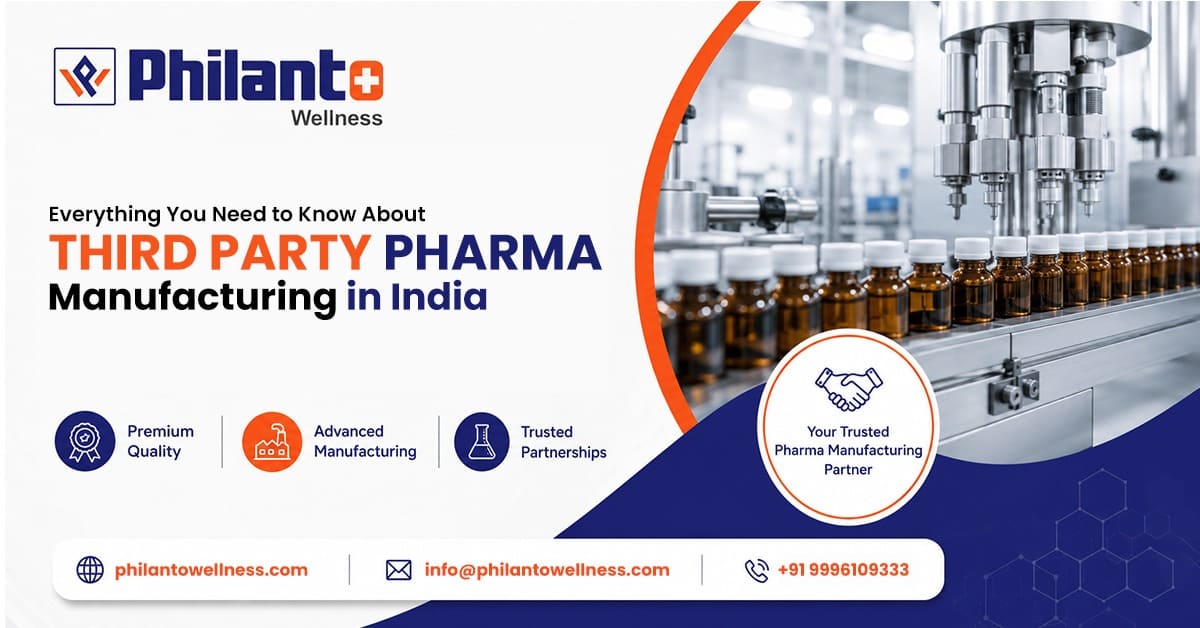
India is one of the biggest pharmaceutical manufacturing hubs around, supplying medicines to local and global markets at once. As healthcare demand keeps going up, a lot of pharma marketers, startups, distributors, and healthcare entrepreneurs are now looking at a Reliable third party manufacturing pharma company as a cheaper way to kick off and also grow their pharmaceutical plans. So if you are thinking about jumping into the pharmaceutical industry or scaling what you already do, it helps to really understand how third-party pharma manufacturing works so you can make smarter business choices instead of guessing along the way.
What Is Third-Party Pharma Manufacturing?
Third party pharma manufacturing is kind of like when a pharma company hands the job off, not completely, but mostly the production work, to a different specialized company. You might also hear it described as “contract manufacturing” in everyday talk. Basically, the client firm asks the partner to make the medicines, while the partner manages the whole production flow.
- In this arrangement, the sequence usually goes something like this, though it can shift a bit depending on the product:
- First, the manufacturer makes the products, using the correct ingredients, and the proper processes.
- Next, the client company handles marketing and sales, and it puts its own brand name on the final medicine.
- Then, the production partner takes care of manufacturing, quality checks , and packaging.
Why has third-party pharma manufacturing been growing in India?
Mostly because India’s pharma sector has modern infrastructure, experienced people, and cost-conscious manufacturing strengths, so it’s turned into a popular destination for contract-based production.
Main growth drivers:
- A rising need for affordable medicines.
- Reduced production costs.
- Access to modern industrial facilities.
- Increasing pharmaceutical exports
- Regulatory-compliant production systems
- Expansion of PCD Pharma Franchise Businesses
- As a result, many pharmaceutical startups and established organizations prefer to outsource production rather than create their own manufacturing facilities.
How Third-Party Pharma Manufacturing Works
It’s usually pretty straightforward by a Reliable Third Party Manufacturing Pharma Company, and the whole point is to make product launches feel less messy, more like a routine thing.
Step 1: Choosing the product
First, the client picks what they want made, something like the following:
Tablets, Capsules, Syrups, Injections, Ointments, Nutraceuticals, Herbal products
Step 2: Picking the right manufacturing partner
Then companies look at manufacturers using a mix of factors, such as:
Certifications, product range, production capacity, quality standards, pricing structure
Step 3: Paperwork and a contract
Thereafter, the parties sign a manufacturing agreement that covers:
Product specifications, pricing, delivery schedules, packaging needs, and regulatory duties
Step 4: Production plus quality checks
The manufacturer makes the goods using the approved formulas and follows the set quality standards. Quality testing happens along the way to keep everything aligned.
Step 5: Packaging and getting it to market
Finally, the finished items are packaged under the client’s brand, then shipped out for distribution, basically ready for market release.
Benefits and services from a leading Third-Party Manufacturing Pharma Company
1. Lower Initial Investment
To set up a pharmaceutical manufacturing place, you usually need a big chunk of capital. With third-party manufacturing, you can avoid the significant expenses associated with building infrastructure; it is less financially burdensome.
2. Faster product launches
Most contract manufacturers already run existing facilities, keep the equipment ready, and have the regulatory systems in order, so your time to market gets shorter, maybe not instantly but definitely quicker.
3. Access to more advanced manufacturing facilities
Your business gets to use newer production tech, without owning the plant directly or having to shoulder all of that ongoing operational burden.
4. Less noise, more conversions and growth
Instead of spending the whole day constantly juggling manufacturing issues, you can put more energy into business development, doctor outreach, and reinforcing your market footprint too, so there is less noise and stronger momentum toward conversions.
5. Scalability
As demand grows, production volumes can rise too, without having to sink more money into fresh manufacturing investments, which is pretty helpful for long-term planning.
Common Challenges Businesses Face while Choosing the Best Third-Party Pharma Manufacturing Company
While Best Third-Party Pharma Manufacturing Company offers many advantages, businesses should also be aware of potential challenges that may arise later. It is not always smooth, and you have to watch the details a bit.
1. Quality control can be a problem.
Not every manufacturer keeps the same level of quality, or uses the same kind of checks, so even if the item looks fine at first ,the real consistency might not be there.
2. Delayed deliveries happen more often than most people assume.
if production slips even a little, it can throw off product availability. That in turn affects how satisfied customers feel, and suddenly the schedules can feel way more drawn out than they should.
3. Less product customization than you want
Some suppliers do not give much room for fine-tuning formulations or packaging. In other words, there may be a strict limit on the extent to which you can customize things.
4. Regulatory compliance issues are not to be ignored.
If a manufacturer is not compliant, it can lead to legal headaches and operational risk. That part can become serious quickly.
5. Communication gaps slow everything down.
When coordination between the client and the manufacturer is weak, schedules can drift. You might think you are aligned, but small misunderstandings tend to pile up.
Thus, all in all, choosing the best manufacturing partner helps reduce these headaches and keeps the whole process steadier.
How to Pick the Best Third Party Pharma Manufacturer in India
Choosing the right partner is honestly one of the biggest decisions if you’re aiming for long-term success in business, because the ripple effects are real later on.
1. First, verify certifications.
Try to find manufacturers that have
WHO-GMP Certification
ISO Certification
relevant regulatory approvals
quality management systems in place
2. Next, assess manufacturing capacity.
Make sure they can handle both your current production needs and whatever future expansion you’re planning—new SKUs, higher volumes, or just different timelines.
3. Then Evaluate the Product Portfolio
If there’s a broader product range, it usually makes it easier to widen your product offerings without starting from scratch or switching partners too quickly.
4. Thereafter, check quality assurance systems.
You can ask questions like:
raw material testing
quality checks during production
finished product testing
batch documentation standards
5. Finally, Review Market Reputation
Customer feedback and industry standing can provide you pretty valuable clues. Sometimes even small signals matter, like how they respond to issues or whether they’re consistent with their processes.
Third Party Manufacturing vs. Own Manufacturing
| Factor | Third-Party Manufacturing | Own Manufacturing |
| Initial Investment | Low | High |
| Infrastructure Requirement | Not Required | Required |
| Regulatory Management | Shared | Fully Managed by Company |
| Time to Market | Faster | Slower |
| Operational Complexity | Lower | Higher |
| Scalability | Easier | Requires Additional Investment |
For many startups and growing businesses, third-party manufacturing offers a practical and cost-effective solution.
Industries That Benefit from Third-Party Pharma Manufacturing
- This approach allows marketers to roll out products without really holding, or owning, manufacturing facilities in-house. It speeds up the whole process, you know.
- PCD Pharma Franchise Businesses: give marketers access to solid products that are already connected with well-known, established brand names, so there is less guessing involved.
- Healthcare Startups: Help shrink the financial runway needed to step into the market.
- Nutraceutical Brands: Backs idea-to-shelf product development and supports big, large-scale production as well.
Questions you may want to ask before finalizing a manufacturer
Q1. Is your third-party manufacturing pharma company WHO-GMP certified?
Ans. This certification kind a proves compliance with accepted quality benchmarks, you know.
Q2.Can the company handle large scale production, meaning more volume if demand grows?
Ans. Scalability really matters a lot for long term business growth.
Q3.What quality testing procedures do they use, specifically?
Ans. A better quality system helps keep steady product standards, not just “good enough” and moving on.
Q4. Are customized packaging and labeling options on the table?
Ans. Sometimes brand differentiation depends on packaging flexibility and labeling style, and even small changes can carry weight.
Q5.What is the average production timeline?
Ans. Knowing the lead times helps with inventory planning and reduces nasty last-minute surprises.
Conclusion
Third party pharma manufacturing in India gives a cost-effective and pretty efficient path for pharmaceutical companies to roll out new products and grow their portfolio, without having to sink money into manufacturing infrastructure. If you work with a trustworthy third party manufacturing pharma company that actually cares about quality, your business can keep regulatory compliance on track, maintain steady product quality, speed up market entry, and support long-term growth. So yeah, picking the right manufacturing partner, like Philanto Wellness, is basically a key step toward building something successful and sustainable.
Frequently Asked Questions (FAQs)
Q1. What is third-party pharma manufacturing?
Ans. It’s a setup where a pharmaceutical business hands over the production to a specialized manufacturer, yet the products still get released under the pharma company’s own brand name.
Q2.Why is third-party pharma manufacturing kinda popular in India, anyway?
Ans. Because it lets companies lower upfront capital spend, use more advanced manufacturing setups, and push products to market sooner, not later.
Q3.What kind of certifications should a real Third-Party Manufacturing Pharma Company have?
Ans. Check for WHO-GMP and ISO credentials, and also other regulatory approvals or endorsements, so the quality and compliance stay real, steady, and not just written on paper.
Q4. Is third-party pharma manufacturing suitable for startups?
Ans. Yes. It’s often a wonderful match for startups since it usually means a lower capital load and less day-to-day operational hassle.
Q5.How can I choose the right third-party pharma manufacturer? Ans.Review the manufacturer’s certifications, product range, quality practices, production capacity, pricing, and whether they actually deliver on time consistently before you decide.